
ZZ plant care
Zamioculcas zamiifolia
Also called Zanzibar gem and Emerald palm. Family Araceae.
In short
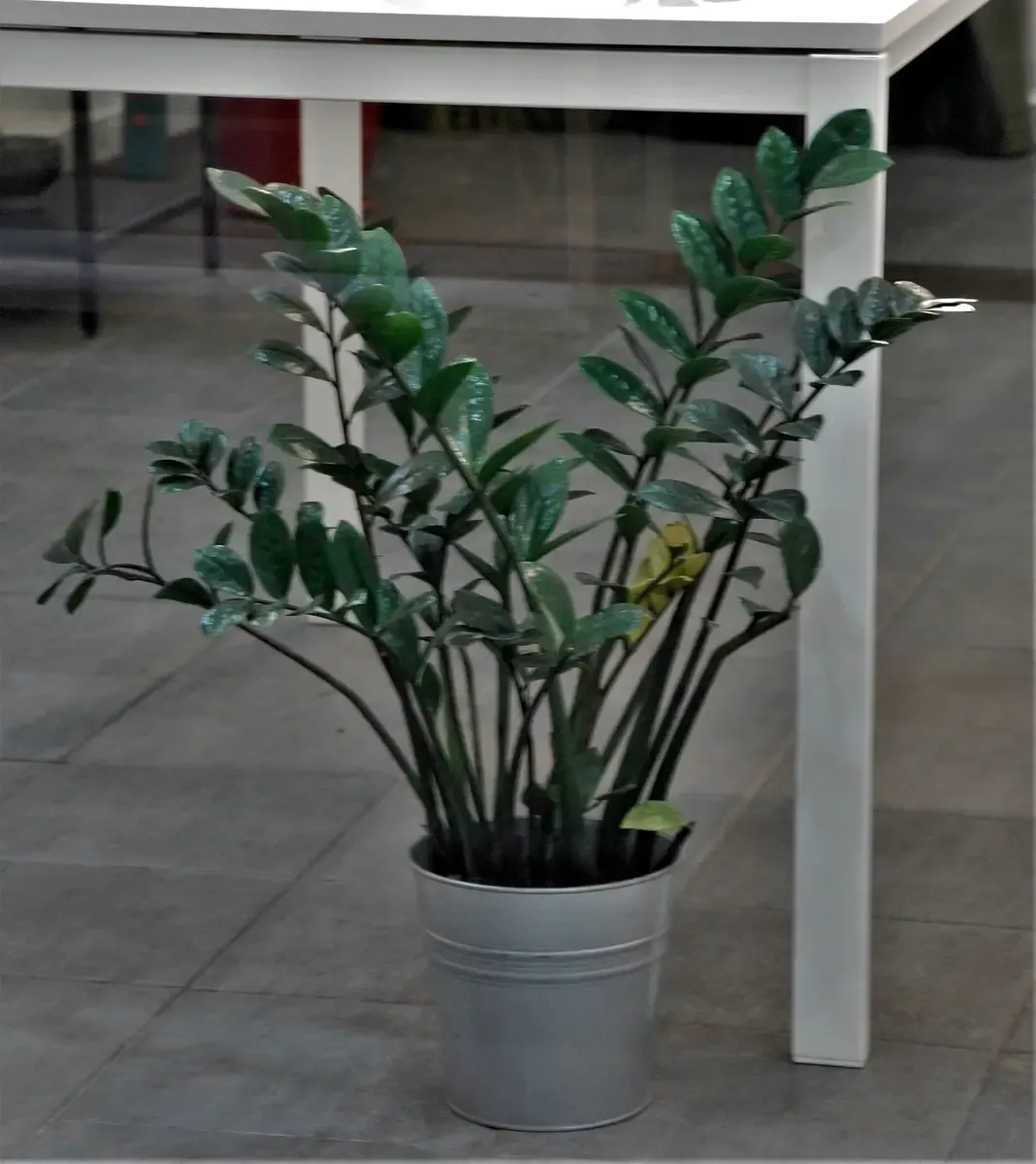
ZZ plant (Zamioculcas zamiifolia) is a slow, tidy plant from eastern Africa with glossy arching stems and potato-like rhizomes that store water. It takes anything from low to bright indirect light, out of direct sun, and is one of the few genuinely happy in a dim room. Water every 2 to 4 weeks once the soil has dried out completely, and every 6 weeks or longer in low light or through winter. Keep it at 15 to 26°C (59 to 79°F); it is toxic to cats and dogs.
Updated
ZZ plant at a glance
- Light
- Low to bright
- Water
- Every 2 to 4 weeksLess often in winter
- Temperature
- 15 to 26°C59 to 79°F
- Humidity
- No special requirement
- Difficulty
- Easy
- Pets
- Toxic to cats and dogs
How often should you water a ZZ plant?
Every 2 to 4 weeks, once the soil has dried out completely, and every 6 weeks or longer in low light or through winter.
Warm room, bright indirect light, ordinary pot: every 2 to 4 weeks, once the soil has dried out completely. In low light or through winter, every 6 weeks or longer is normal and nothing is wrong. Yellowing stems that go soft at the base mean too much water. When in doubt, wait another week.
How much light does a ZZ plant need?
Low to bright indirect light, out of direct sun; it is genuinely happy in a dim room.
Low to bright indirect. One of the few genuinely happy in a dim room. Avoid direct sun.
How to feed a ZZ plant
Half-strength balanced feed two or three times over spring and summer.
Half-strength balanced feed two or three times over spring and summer. It grows slowly and needs very little.
When to repot a ZZ plant
Every 2 to 3 years, or when the rhizomes crowd or distort the pot, one size up into free-draining compost.
Every 2 to 3 years, or when the rhizomes visibly crowd the pot or distort it. Free-draining compost, and only one size up.
What temperature and humidity does a ZZ plant like?
15 to 26°C (59 to 79°F), with no special humidity needs.
15 to 26°C (59 to 79°F). Humidity: No special requirement.
Is a ZZ plant toxic to cats and dogs?
Yes, it is toxic to cats and dogs: every part contains calcium oxalate crystals that irritate if chewed.
Insoluble calcium oxalate crystals in every part. Irritating if chewed; the sap can irritate skin.
How big does a ZZ plant get?
45 to 90cm (18 to 35 inches) tall, as glossy arching stems that need no support.
Slow and tidy. Glossy arching stems 45 to 90cm (18 to 35 inches) tall emerging in flushes: nothing for months, then several new shoots at once. Naturally upright; it does not need support or training.
Where does the ZZ plant come from?
Eastern Africa, from Kenya south to north-eastern South Africa.
Dry grassland and forest with a long dry season. Thick potato-like rhizomes underground store water and let it sit out months of drought, then push out new growth when the rain returns.
What's wrong with my ZZ plant?
| What you see | What it usually means | What to do |
|---|---|---|
| Yellowing stems that go soft at the base | Too much water | Stop watering until the soil has dried out completely. When in doubt, wait another week. |
| A pot bulging or distorted | Rhizomes crowding the pot | Repot one size up into free-draining compost. |
| Scorched or bleached leaves | Direct sun | Move it out of direct sun into low to bright indirect light. |
| No new growth for months | Its normal rhythm of growing in flushes | Nothing to fix. Keep watering sparingly and new shoots will come. |
Questions about the ZZ plant
Why is my ZZ plant not growing?
It grows in flushes: nothing for months, then several new shoots at once. Slow growth is normal.
Can a ZZ plant live in a dark room?
Yes. It is one of the few plants genuinely happy in a dim room. It needs even less water there: every 6 weeks or longer is normal.
What are the potato-like roots in a ZZ plant's pot?
Rhizomes, which store water so it can sit out months of drought. They are why it needs so little water, and repotting is due when they crowd or distort the pot.
Is ZZ plant sap harmful to skin?
The sap can irritate skin, so wash your hands after cutting or repotting it.


 Christi Miltz, CC0
 Jacqui Geux, CC BY 4.0
 Wikimedia Commons, public domain