
Mini monstera care
Rhaphidophora tetrasperma
Also called Monstera minima, Philodendron minima, Ginny philodendron and Rhaphidophora. Family Araceae.
In short
Mini monstera (Rhaphidophora tetrasperma) is a fast climbing vine from Southern Thailand and Peninsular Malaysia with glossy split leaves, like a monstera in miniature. Give it bright indirect light out of direct midday sun, and water about every 7 days in spring and summer once the top 3cm (1 inch) is dry, every 10 to 14 days in winter. Keep it at 18 to 29°C (64 to 84°F) and above 13°C (55°F). It is toxic to cats and dogs.
Updated
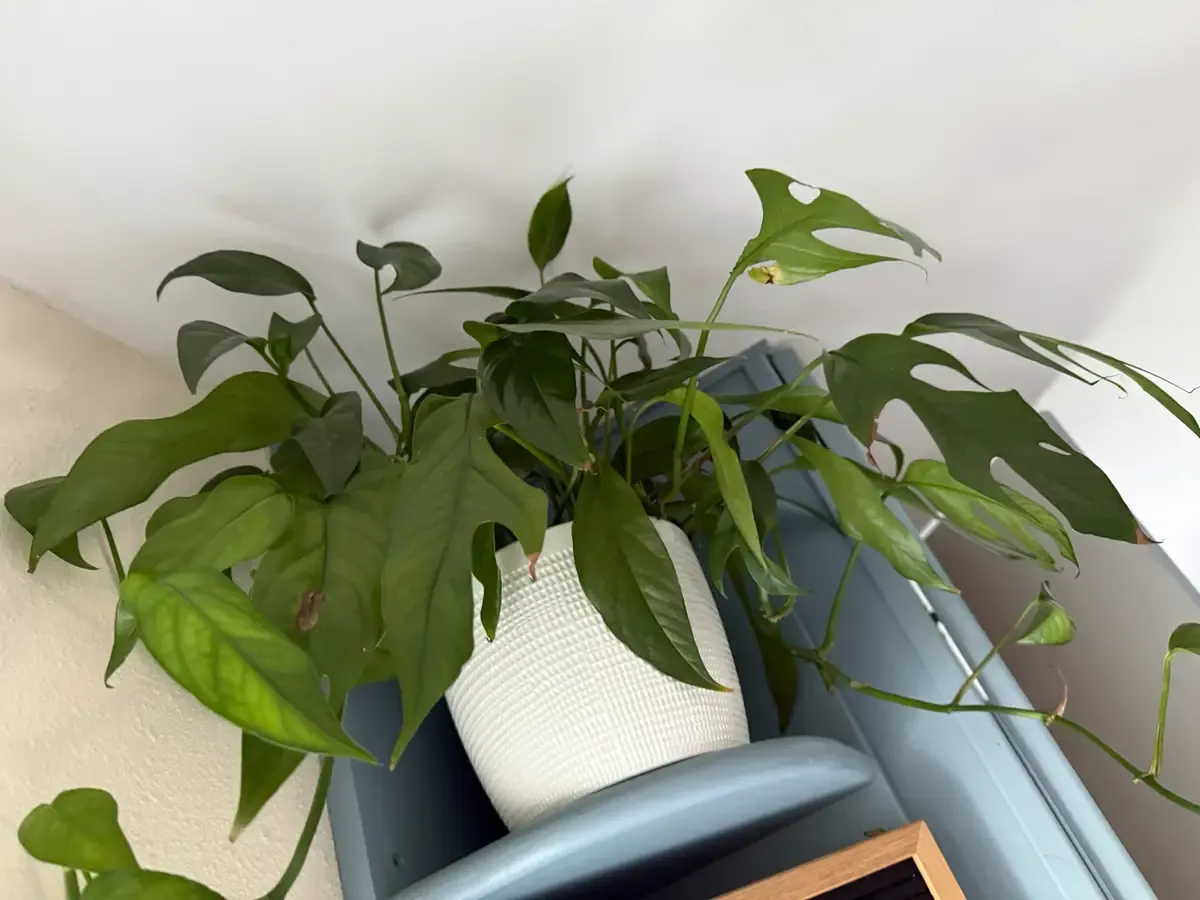
Mini monstera at a glance
- Light
- Bright indirect
- Water
- Every 7 daysLess often in winter
- Temperature
- 18 to 29°C64 to 84°F
- Humidity
- Average to high
- Difficulty
- Easy
- Pets
- Toxic to cats and dogs
How often should you water a mini monstera?
About every 7 days in spring and summer, once the top 3cm (1 inch) is dry, and every 10 to 14 days in winter.
Bright room, chunky aroid mix: about every 7 days in spring and summer, once the top 3cm (1 inch) is dry. Every 10 to 14 days in winter. Yellowing lower leaves with wet compost mean overwatering; curling, drooping leaves with dry compost mean thirst.
How much light does a mini monstera need?
Bright indirect light, out of direct midday sun; it tolerates medium light but grows slower with plain leaves.
Bright indirect light; the splits come with good light. It tolerates medium light but grows slower with plain leaves. Direct midday sun scorches it.
How to feed a mini monstera
Balanced liquid feed at half strength every 3 to 4 weeks from spring to early autumn.
Balanced liquid feed at half strength every 3 to 4 weeks from spring to early autumn. It is a fast grower and uses it.
When to repot a mini monstera
Every 1 to 2 years in spring, into a free-draining mix of bark, perlite and compost.
Every 1 to 2 years in spring into a free-draining mix of bark, perlite and compost. Add or extend a moss pole at the same time.
How to prune a mini monstera
Cut long stems just below a node with an aerial root; the plant branches from the cut and the tips root in water.
Cut long stems just below a node with an aerial root; the tips root in water in a couple of weeks and the plant branches from the cut. Tie new growth to the pole.
How to clean a mini monstera's leaves
Wipe the leaves now and then, checking for thrips and spider mites as you go.
Wipe the leaves now and then and check for thrips and spider mites, which it attracts.
What temperature and humidity does a mini monstera like?
18 to 29°C (64 to 84°F), and keep it above 13°C (55°F).
18 to 29°C (64 to 84°F). Keep above 13°C (55°F). Humidity: Average to high. New leaves can tear or stick while unfurling in very dry air.
Is a mini monstera toxic to cats and dogs?
Yes, it is toxic to cats and dogs: chewing it causes immediate mouth pain, drooling and vomiting.
Contains insoluble calcium oxalate crystals. Chewing causes immediate mouth pain, drooling and vomiting in cats and dogs, and mouth irritation in people.
How big does a mini monstera get?
2m (7 feet) or more indoors on a moss pole within a few years, with leaves 15 to 30cm (6 to 12 inches) long; without support it trails and the leaves stay small.
A fast climbing vine with glossy, split leaves 15 to 30cm (6 to 12 inches) long, like a monstera in miniature, that grow larger and more deeply divided as the plant climbs. Reaches 2m (7 feet) or more indoors on a moss pole within a few years. Without support it trails and the leaves stay small.
Where does the mini monstera come from?
Southern Thailand and Peninsular Malaysia, where it climbs tree trunks in humid tropical forest.
A climber of humid tropical forest, clinging to tree trunks with aerial roots and growing towards the brighter canopy. Neither a monstera nor a philodendron, despite its names.
What's wrong with my mini monstera?
| What you see | What it usually means | What to do |
|---|---|---|
| Yellowing lower leaves with wet compost | Overwatering | Let the top 3cm (1 inch) dry before watering again, and water every 10 to 14 days in winter. Check the pot drains freely. |
| Curling, drooping leaves with dry compost | Thirst | Water thoroughly and let it drain, then check the top 3cm (1 inch) a little sooner from now on. |
| Small, plain leaves with no splits | Too little light, or no support to climb | Move it to bright indirect light and tie new growth to a moss pole. |
| Pale speckling or fine webbing on the leaves | Thrips or spider mites, which it attracts | Wipe both sides of the leaves, keep it away from other plants until it is clear, and check it regularly when you clean it. |
| Scorched, bleached patches on the leaves | Direct midday sun | Move it out of direct midday sun into bright indirect light. Scorched patches do not recover, but new leaves will be unmarked. |
Questions about the mini monstera
Is a mini monstera a real monstera?
No. Rhaphidophora tetrasperma is in the same family, Araceae, but it is neither a monstera nor a philodendron, despite its common names.
Why are my mini monstera's leaves not splitting?
The splits come with good light and with climbing. In medium light, or trailing without support, the leaves stay small and plain; move it to bright indirect light and give it a moss pole.
How do I propagate a mini monstera?
Cut a long stem just below a node with an aerial root and stand the cutting in water. It roots in a couple of weeks, and the parent branches from the cut.
Why do new mini monstera leaves tear as they open?
Very dry air can make new leaves tear or stick while unfurling. It is happiest in average to high humidity.


 Jacqui Geux, CC BY 4.0
 Wikimedia Commons, public domain
 Флорист, CC BY 4.0