
Monstera care
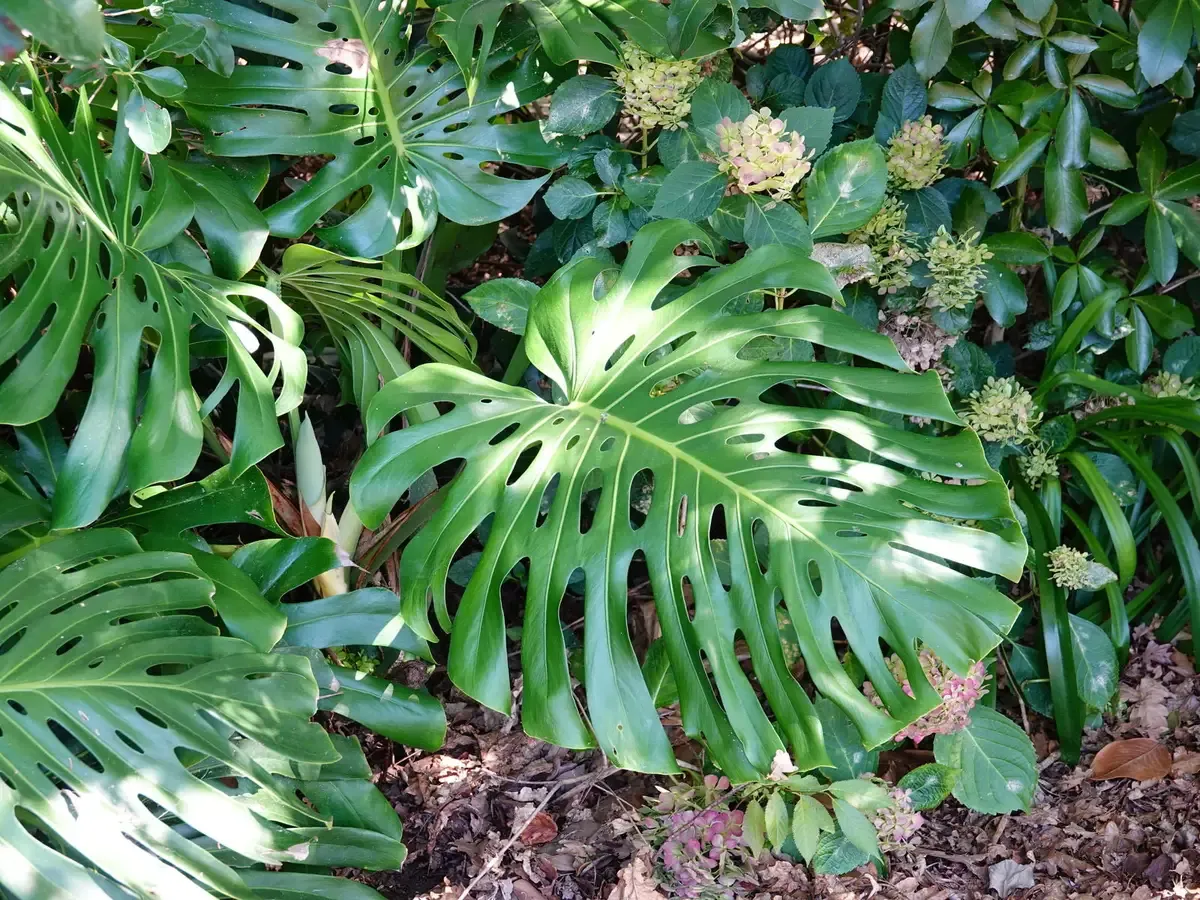
Monstera deliciosa
Also called Swiss cheese plant and Split-leaf philodendron. Family Araceae.
In short
Monstera (Monstera deliciosa), the Swiss cheese plant, is a climber from southern Mexico through Panama whose leaves develop holes and splits as it matures in decent light. Give it bright indirect light and water every 7 to 10 days in spring and summer once the top 3 to 5cm (1 to 2 inches) is dry, or every 2 to 3 weeks through winter or in a cool room. Keep it at 18 to 27°C (64 to 81°F), away from cold draughts. It is toxic to cats and dogs.
Updated
Monstera at a glance
- Light
- Bright indirect
- Water
- Every 7 to 10 daysLess often in winter
- Temperature
- 18 to 27°C64 to 81°F
- Humidity
- Average room humidity is fine; higher is better
- Difficulty
- Easy
- Pets
- Toxic to cats and dogs
How often should you water a monstera?
Usually every 7 to 10 days in spring and summer, once the top 3 to 5cm (1 to 2 inches) is dry, and every 2 to 3 weeks through winter or in a cool room.
Warm room, bright indirect light, an ordinary pot: usually every 7 to 10 days in spring and summer. Check first: push a finger in and water only once the top 3 to 5cm (1 to 2 inches) is dry. In a cool room or through winter the same plant may want water every 2 to 3 weeks. Yellowing lower leaves generally mean too much water, not too little.
How much light does a monstera need?
Bright indirect light; it tolerates medium light but grows slowly without splits, and direct midday sun scorches it.
Bright indirect light. Tolerates medium light but grows slowly and stays unfenestrated. Direct midday sun scorches the leaves.
How to feed a monstera
A balanced liquid feed at half strength every 4 to 6 weeks from spring to early autumn, and none in winter.
A balanced liquid feed at half strength every 4 to 6 weeks while it is actively growing, roughly spring through early autumn. Stop entirely in winter: feeding a plant that is not growing just builds up salt in the soil.
When to repot a monstera
Every 2 to 3 years, or when roots circle the drainage holes, going up one pot size, ideally in spring.
Every 2 to 3 years, or when roots circle the drainage holes and the plant dries out unusually fast. Go up one pot size only; a pot that is too large holds wet soil around roots that cannot reach it. Spring is the kindest time.
How to prune a monstera
Cut back leggy stems in spring just above a node, and take off yellow or damaged leaves at any time.
Cut back leggy stems in spring to keep it compact, just above a node. Yellow or damaged leaves can come off at any time.
How to clean a monstera's leaves
Wipe the big leaves with a damp cloth every month or so.
Wipe the big leaves with a damp cloth every month or so. Dust genuinely reduces the light they can use, and it is also when you will spot pests early.
What temperature and humidity does a monstera like?
18 to 27°C (64 to 81°F); it is unhappy below 12°C (54°F) and damaged by cold draughts.
18 to 27°C (64 to 81°F). Unhappy below 12°C (54°F) and damaged by cold draughts. Humidity: Average room humidity is fine; higher is better. Brown crispy leaf edges usually mean the air is too dry.
Is a monstera toxic to cats and dogs?
Yes, it is toxic to cats and dogs: chewing it causes mouth and throat irritation, drooling and vomiting.
Contains insoluble calcium oxalate crystals. Chewing causes mouth and throat irritation, drooling, and vomiting in cats and dogs.
How big does a monstera get?
2 to 3m (7 to 10 feet) indoors over several years, as a climber that needs a moss pole or stake to stay upright.
A climber, not a bush. Reaches 2 to 3m (7 to 10 feet) indoors over several years and will lean or sprawl without support: a moss pole or stake keeps it upright and encourages bigger leaves. The famous holes and splits only appear as the plant matures, and only in decent light; a young or shaded Monstera makes plain heart-shaped leaves.
Where does the monstera come from?
Southern Mexico through Panama, where it climbs tree trunks in tropical rainforest.
Tropical rainforest. It starts life on the forest floor and climbs tree trunks toward the canopy, anchoring with thick aerial roots and taking dappled light filtered through the leaves above.
What's wrong with my monstera?
| What you see | What it usually means | What to do |
|---|---|---|
| Yellowing lower leaves | Usually too much water, not too little | Water only once the top 3 to 5cm (1 to 2 inches) is dry, and much less often through winter. |
| Brown, crispy leaf edges | Air that is too dry | Raise the humidity around it; average room humidity is fine, but higher is better. |
| Plain leaves with no holes | A young plant, or not enough light | Move it to bright indirect light and give it a pole to climb. The splits come as it matures. |
| Scorched, pale patches on the leaves | Direct midday sun | Move it back into bright indirect light. Damaged leaves can come off at any time. |
| Leaning, sprawling stems | A climber with nothing to climb | Tie it to a moss pole or stake, and cut back leggy stems in spring just above a node. |
Questions about the monstera
Why doesn't my monstera have holes in its leaves?
The holes and splits appear only as the plant matures, and only in decent light. A young or shaded monstera makes plain heart-shaped leaves; bright indirect light and a pole to climb help.
Does a monstera need a moss pole?
It is a climber, not a bush, and leans or sprawls without support. A moss pole or stake keeps it upright and encourages bigger leaves.
What are the long roots growing from my monstera's stem?
Aerial roots, which it uses to anchor itself to tree trunks in the wild. Leave them be, or guide them onto the moss pole.
Is a Swiss cheese plant the same as a monstera?
Yes. Swiss cheese plant and split-leaf philodendron are both common names for Monstera deliciosa, although it is not a philodendron.


 Christi Miltz, CC0
 Wikimedia Commons, public domain
 Флорист, CC BY 4.0