
Snake plant care
Dracaena trifasciata
Also called Mother-in-law's tongue and Sansevieria. Family Asparagaceae.
In short
Snake plant (Dracaena trifasciata), long sold as sansevieria, is a slow, upright plant from West Africa that stores water in its thick leaves and copes with almost any light, from a dim hallway to a bright window. Water every 2 to 4 weeks at most, only once the soil is dry all the way through, and every 6 to 8 weeks through winter in a cool or dim room. Keep it at 15 to 29°C (59 to 84°F) and above 10°C (50°F). It is toxic to cats and dogs.
Updated
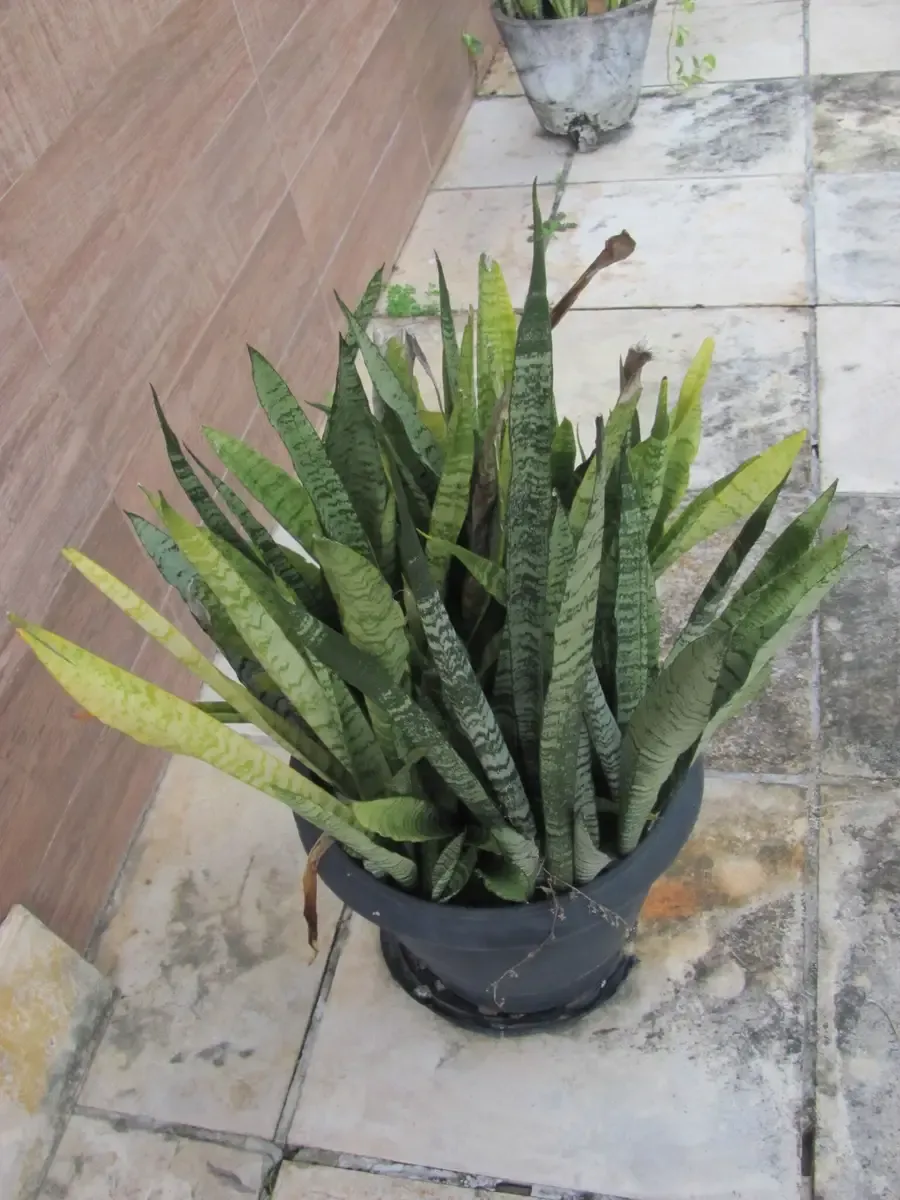
Snake plant at a glance
- Light
- Almost any light
- Water
- Every 2 to 4 weeksLess often in winter
- Temperature
- 15 to 29°C59 to 84°F
- Humidity
- Prefers dry air
- Difficulty
- Easy
- Pets
- Toxic to cats and dogs
How often should you water a snake plant?
Every 2 to 4 weeks at most, only when the soil is dry all the way through, and every 6 to 8 weeks through winter in a cool or dim room.
This is the plant people kill with kindness. Warm room, bright light, ordinary pot: every 2 to 4 weeks at most, and only when the soil is dry all the way through. In a cool or dim room, every 6 to 8 weeks through winter is plenty. Soft, yellowing leaves collapsing at the base mean rot from too much water; wrinkled or curling leaves mean it is genuinely thirsty.
How much light does a snake plant need?
Almost any light, from a dim hallway to a bright window, though it grows faster with more.
Almost anything, from a dim hallway to a bright window. Grows faster with more light.
How to feed a snake plant
Very little: a half-strength feed two or three times across spring and summer is enough for the whole year.
Very little. A half-strength feed two or three times across spring and summer is enough for the whole year.
When to repot a snake plant
Every 3 to 5 years, only once roots push the plant up out of its pot, into gritty, free-draining compost.
Every 3 to 5 years, and only once roots are pushing the plant up out of its pot. It flowers and grows best when snug. Use gritty, free-draining compost.
How to clean a snake plant's leaves
Wipe the broad, flat leaves when they look dusty, every month or two.
Wipe the broad flat leaves when they look dusty, every month or two.
What temperature and humidity does a snake plant like?
15 to 29°C (59 to 84°F), and keep it above 10°C (50°F).
15 to 29°C (59 to 84°F). Keep above 10°C (50°F). Humidity: Prefers dry air. Nothing to do here.
Is a snake plant toxic to cats and dogs?
Yes, it is toxic to cats and dogs: its saponins cause nausea, vomiting and drooling if chewed.
Contains saponins. Chewing causes nausea, vomiting, and drooling in cats and dogs.
How big does a snake plant get?
Leaves 30cm (12 inches) to a metre tall, spreading slowly by underground rhizomes until the pot is full.
Slow and architectural. Stiff upright leaves 30cm (12 inches) to a metre tall, spreading gradually by underground rhizomes until the pot is full. Expect a new leaf or two a year, not a flush of growth.
Where does the snake plant come from?
West Africa, from Nigeria to the Congo, on dry, rocky, seasonally arid ground.
Dry, rocky, seasonally arid ground in full sun to light shade. It stores water in thick upright leaves and uses CAM photosynthesis, opening its pores at night to lose less moisture.
What's wrong with my snake plant?
| What you see | What it usually means | What to do |
|---|---|---|
| Soft, yellowing leaves collapsing at the base | Rot from too much water | Stop watering until the soil is dry all the way through. Remove any mushy leaves and, if the base is rotten, repot what is firm into gritty compost. |
| Wrinkled or curling leaves | Genuine thirst | Water thoroughly once and let it drain, then water again only when the soil is dry all the way through. |
| The plant pushing up out of its pot | Rhizomes have filled the pot | Repot into gritty, free-draining compost. This is the sign it is due, usually every 3 to 5 years. |
| No new leaves for months | Its natural slow growth, or low light | Nothing is wrong. Move it to brighter light if you want it to grow faster. |
Questions about the snake plant
Is a snake plant a sansevieria?
Yes. It was long known as Sansevieria trifasciata and is now classed as Dracaena trifasciata; the plant is the same.
Why is my snake plant not growing?
It is naturally slow: expect a new leaf or two a year, not a flush of growth. More light speeds it up.
Should I mist a snake plant?
No. It prefers dry air, so there is nothing to do for humidity.
Does a snake plant flower?
It can, and it flowers and grows best when kept snug in its pot rather than repotted often.



 frau-doktor, public domain
 Christi Miltz, CC0
 Jacqui Geux, CC BY 4.0